
Special Education Teacher Salary by State: Complete 2026 Guide
Special education teacher salaries range from $38K in Mississippi to $93K in Seattle. See all 50 states ranked, factors that affect pay, and how to maximize your earnings.
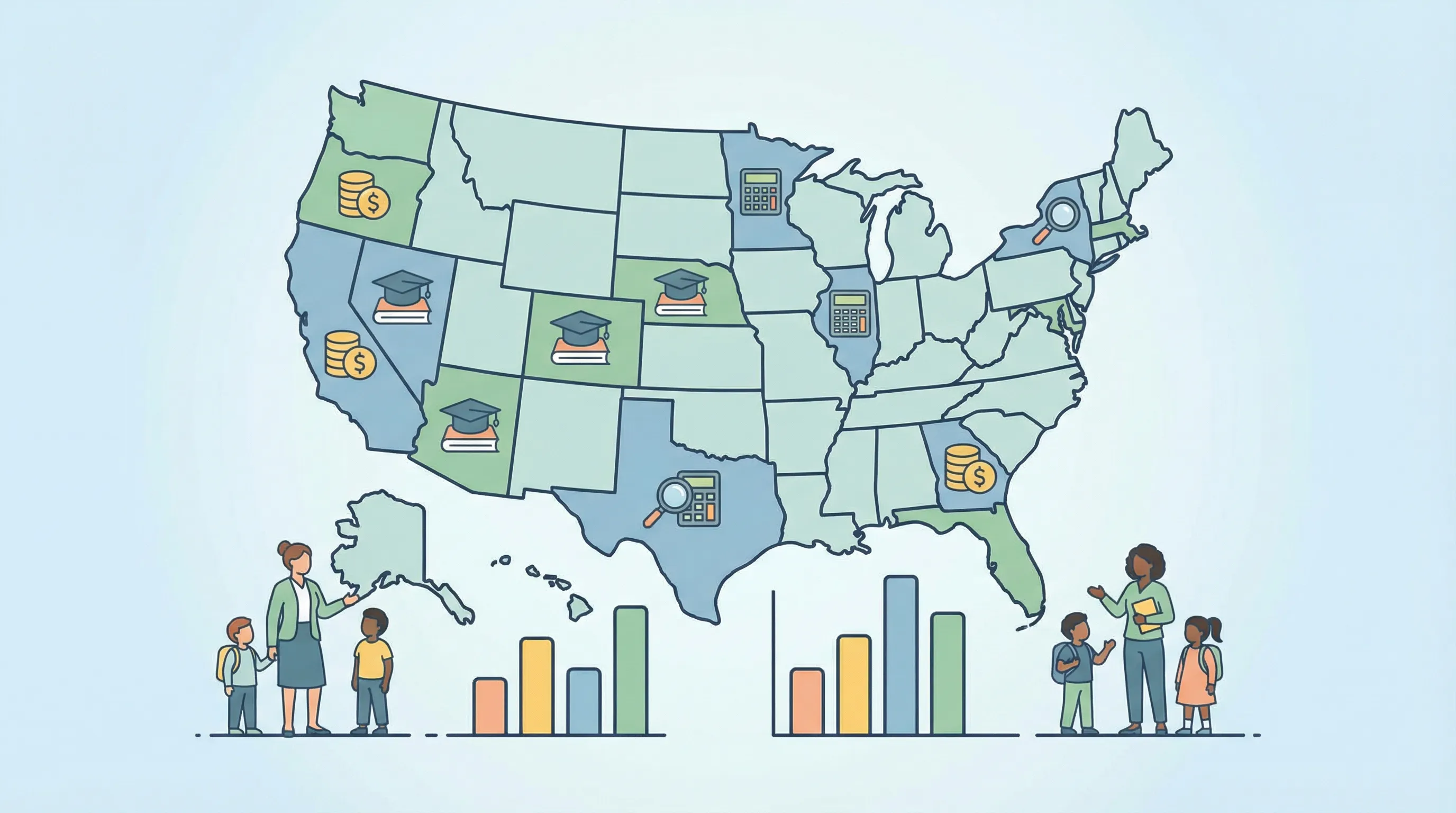
Special education teacher salaries range from $38,081 in Mississippi to $93,450 in Seattle, Washington. The national median is $64,270 per year according to the Bureau of Labor Statistics (May 2024). Where you teach can mean a $55,000 difference in annual pay.
This matters now more than ever. With 74% of schools struggling to fill special education positions, SPED teachers have real leverage when choosing where to work and negotiating compensation. Here's the complete breakdown by state, plus the factors that determine where you fall within each range.
National Average Salary for Special Education Teachers
The median annual wage for special education teachers was $64,270 as of May 2024. That breaks down to roughly $31 per hour for a standard contract year.
Here's how salaries distribute nationally:
| Percentile | Annual Salary |
|---|---|
| 10th (Entry) | $45,570 |
| 25th | $50,000 |
| 50th (Median) | $64,270 |
| 75th | $66,000 |
| 90th (Top) | $103,290 |
Special education teachers typically earn salaries similar to general education teachers. Most school districts use the same salary schedules for both, largely due to union contracts that standardize pay across specialties.
Highest-Paying States for Special Education Teachers
If maximizing salary is your priority, these states offer the best compensation for SPED teachers.
Top 10 States Ranked by Salary
| Rank | State | Average Salary | Hourly Rate |
|---|---|---|---|
| 1 | Maryland | $76,282 | $36.67 |
| 2 | Alaska | $75,943 | $36.51 |
| 3 | Washington | $64,030 | $30.78 |
| 4 | New York | $63,837 | $30.69 |
| 5 | California | $61,205 | $29.43 |
| 6 | Connecticut | $60,497 | $29.09 |
| 7 | Oregon | $60,141 | $28.91 |
| 8 | New Jersey | $59,716 | $28.71 |
| 9 | Massachusetts | $58,846 | $28.29 |
| 10 | Virginia | $57,946 | $27.86 |
Note that metropolitan areas often exceed state averages significantly. Seattle-area special education teachers earn up to $93,450, while New York City salaries can reach $94,000 in certain districts.
Cost of Living Considerations
High salaries don't always mean more purchasing power. A $76,000 salary in Maryland goes further than $90,000 in San Francisco. Before relocating, calculate your adjusted income using cost-of-living tools.
That said, states like Virginia and Oregon offer strong salaries with more moderate living costs compared to California or New York. These represent potentially better value for SPED teachers weighing a move.
Lowest-Paying States for Special Education Teachers
Some states fall well below the national average. These numbers reflect systemic differences in education funding rather than the value of teachers' work.
States Below the National Average
| Rank | State | Average Salary |
|---|---|---|
| 50 | Mississippi | $38,081 |
| 49 | Montana | $38,737 |
| 48 | Maine | $38,878 |
| 47 | Arkansas | $39,241 |
| 46 | Louisiana | $40,523 |
| 45 | Arizona | $40,759 |
| 44 | Indiana | $40,958 |
| 43 | South Dakota | $41,370 |
| 42 | Utah | $41,739 |
| 41 | South Carolina | $41,739 |
Why Some States Pay Less
Three factors drive these differences:
- State education funding models — States relying heavily on local property taxes often have wider district-to-district variation and lower averages overall.
- Cost of living — Lower-paying states generally have lower costs, though the correlation isn't perfect. Mississippi's $38,081 salary still doesn't stretch as far as the number suggests.
- Union presence — States with stronger teachers' unions typically negotiate higher base salaries and better salary schedules.
Factors That Affect Your Special Education Teacher Salary
Your state sets the baseline, but several factors determine where you land within that range.
Education Level
A master's degree typically adds $5,000 to $10,000 to your annual salary. According to the Bureau of Labor Statistics, professionals with a master's degree earn about 20% more on average than those with only a bachelor's degree.
Job postings requiring a master's degree advertise median wages averaging $60,300 per year—even in states that don't mandate advanced degrees for certification.
Years of Experience
Most districts use step-and-lane salary schedules. You'll typically see raises for each year of service (steps) and for additional education (lanes). A teacher with 15 years of experience often earns 30-50% more than a first-year teacher in the same district.
Certification and Endorsements
Beyond your basic special education credential, additional endorsements can boost your value:
- Autism spectrum endorsement — High demand in most districts
- Behavior intervention certification — Especially valued for self-contained classrooms
- BCBA credential — Can command premium pay in some districts
- National Board Certification — Adds $2,000-$10,000 depending on state incentives
Grade Level Taught
Salary varies slightly by the students you serve:
- Preschool special education: Lower end of scale
- Elementary (K-5): ~$71,770 average
- Secondary (6-12): ~$74,670 average
Secondary teachers typically earn more due to subject-matter requirements and the complexity of transition planning for older students.
School Type
Public schools generally pay more than private schools and offer better benefits. Charter school pay varies widely. Urban districts often pay premiums over rural areas due to higher cost of living and recruitment challenges.
Special Education vs. General Education Teacher Salary
Do special ed teachers earn more than their general education colleagues? Generally, no.
Most school districts place all teachers on the same salary schedule regardless of specialty. Union contracts typically prohibit paying different rates for different teaching assignments at the same experience and education level.
However, some districts offer workarounds:
- SPED stipends: 5% additional pay is common in shortage areas
- Extended contracts: Pay for summer IEP work or additional planning time
- Signing bonuses: Districts with critical shortages may offer $2,000-$10,000 to attract SPED teachers
If you're weighing SPED against general education purely on salary, the pay is usually equivalent. The difference comes in working conditions, caseload, and paperwork requirements.
Job Outlook and Demand for SPED Teachers
The Bureau of Labor Statistics projects a 1% decline in special education teacher employment from 2024 to 2034. But that headline obscures the real story.
Despite flat growth projections, 37,800 special education teaching positions open annually. These openings result from retirements and teachers leaving the profession—not reduced demand.
The numbers paint a clear picture of a profession in shortage:
- 74% of schools report difficulty filling SPED positions with fully certified teachers
- 21 states classify their special education teacher shortage as "critical"
- 80% of districts report unfilled special education positions
This shortage creates leverage. Schools competing for qualified SPED teachers often offer better starting salaries, signing bonuses, loan forgiveness, and faster movement on salary schedules.
How to Maximize Your Salary as a Special Education Teacher
Beyond choosing the right state, you can take concrete steps to increase your earning potential.
Pursue Advanced Credentials
The ROI on a master's degree typically pays back within 2-3 years through higher salary. Many districts also offer tuition reimbursement, reducing your out-of-pocket costs.
National Board Certification requires significant effort but adds $2,000-$10,000 annually depending on your state's incentive program.
Consider High-Demand Locations
States with critical shortages often sweeten offers:
- Signing bonuses of $2,000-$10,000
- Loan forgiveness programs for Title I schools
- Relocation assistance
- Accelerated salary schedule placement for experienced teachers
Tennessee reports 31% of SPED positions vacant. North Dakota, West Virginia, California, Washington, Texas, and Michigan also face significant shortages.
Negotiate Strategically
Come to negotiations prepared:
- Know your state's shortage status
- Document your IEP compliance record
- Highlight specialized training and endorsements
- Ask about stipends, extended contracts, and signing bonuses
The shortage gives you leverage. Use it.
Frequently Asked Questions
What state pays special education teachers the most?
Maryland offers the highest average salary at $76,282 per year. However, specific metro areas can exceed state averages—Seattle-area teachers can earn up to $93,450.
Do special ed teachers get paid more than regular teachers?
Typically no. Most districts use identical salary schedules for all teachers. Some offer 5% stipends or extended contracts for SPED teachers, but base pay is usually equivalent.
How much do special education teachers make per hour?
The national average ranges from $26 to $31 per hour depending on the data source and methodology. This assumes a standard teacher contract year of approximately 185 work days.
Is special education teaching a good career?
For those suited to the work, yes. Job security is strong due to federal IDEA requirements, demand consistently exceeds supply, and the work is meaningful. Salaries are competitive with general education, and advancement opportunities exist in administration, coordination, and consulting roles.
Make an Informed Decision
Special education teacher salaries vary dramatically by location—from $38,081 in Mississippi to over $90,000 in top metro areas. But raw salary numbers only tell part of the story.
Factor in cost of living, shortage-driven incentives, and your own credentials when evaluating opportunities. With 74% of schools struggling to fill SPED positions, qualified teachers have options.
Ready to explore opportunities in your target state? Browse current special education teaching positions to see what's available.
Sources:
Ready to Find Your Dream SPED Job?
Browse thousands of special education opportunities across the country
Browse Jobs